WhatsApp:+86 15236742901

Email:sale@xxdahan.com


WhatsApp:+86 15236742901
Email:sale@xxdahan.com
Friday February-27 2026 16:45:40
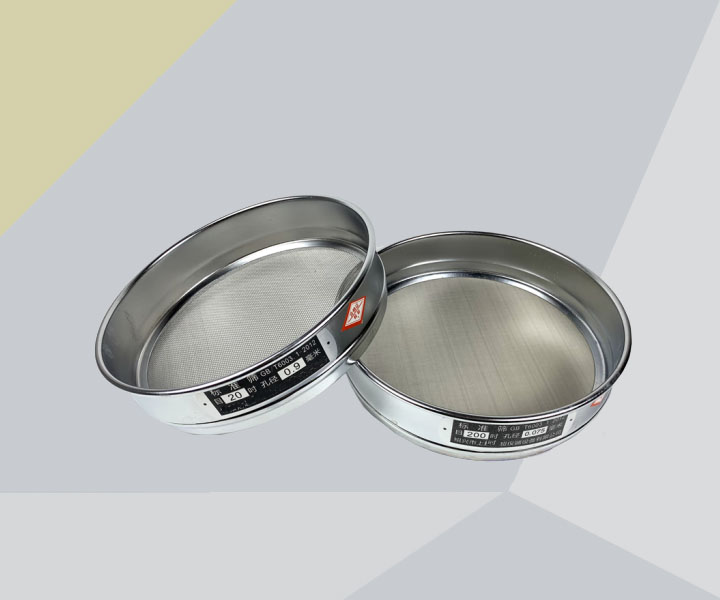
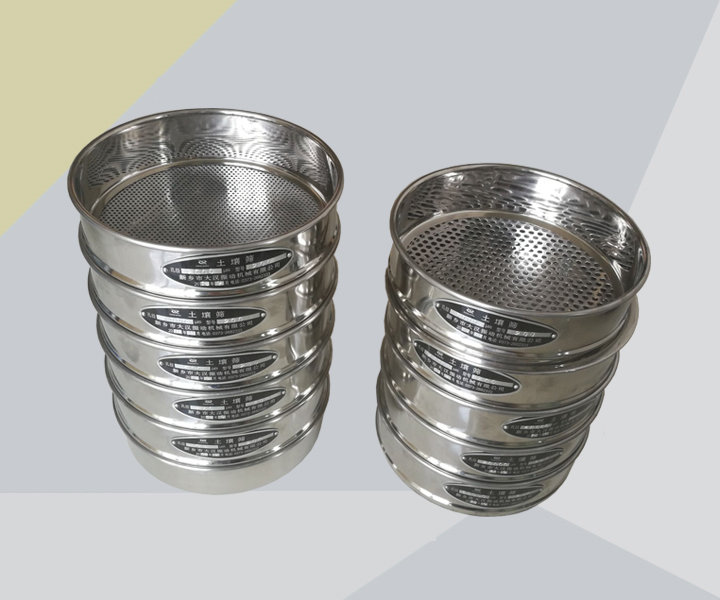
Test Sieve For Soil Particle Analysis is a standard sieving instrument used to determine the particle size distribution and gradation of soil particles. In use, a set of sieves with apertures arranged from largest to smallest are stacked. Under vibration or tapping, particles in the soil sample will pass through or be retained on the sieves of different apertures according to their size. After weighing, the mass proportion of each particle size can be calculated, thus understanding the particle composition of the soil sample.
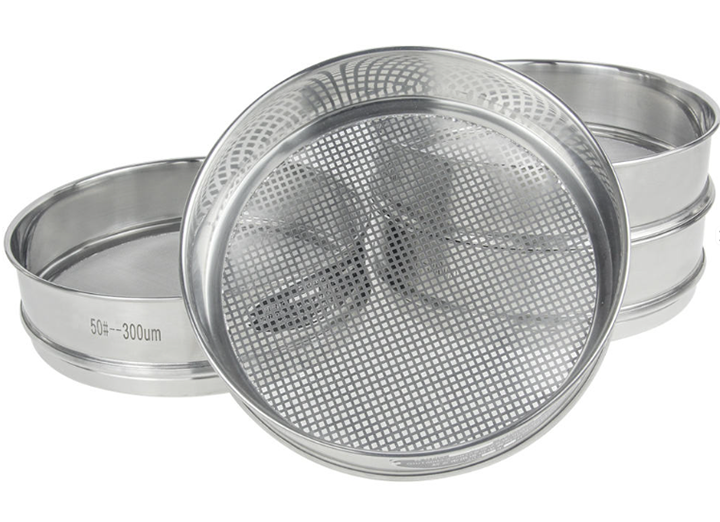
In terms of application range, conventional sieves generally cover 0.075mm to 60mm and can be used to distinguish coarse-grained soils such as gravel, coarse sand, and fine sand. With finer sieves, it can extend to 0.02mm for the detection of even finer particles. Common types based on structure and aperture shape include square-aperture sieves, round-aperture sieves, standard nested sieves, hand sieves, and sample dividing sieves. Square-aperture sieves are more commonly used in laboratories because the grading results are more stable, the differences in repeated tests are smaller, and daily testing is more convenient.
The test sieve for soil particle analysis generally uses two methods: dry sieving and wet sieving. The choice between these two methods depends on the properties of the soil sample.
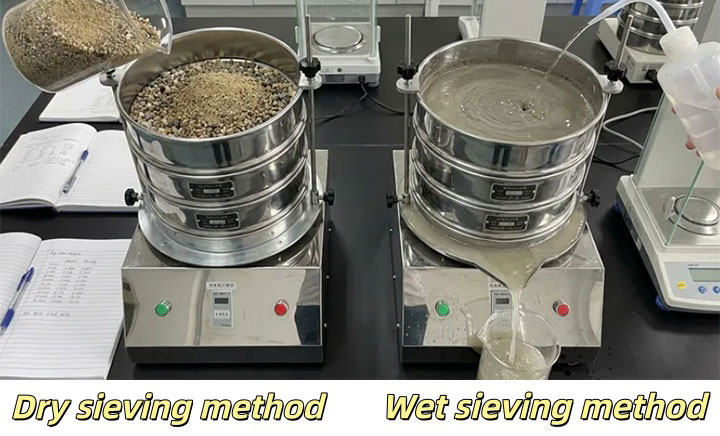
The dry sieving method is relatively straightforward. First, let the soil sample air dry in a cool, shaded place. Gently break up any clumps, remove impurities such as tree roots and small stones, and weigh a certain amount for later use. Then, stack a set of standard sieves in descending order of aperture size. Pour the soil sample into the top sieve, cover it, and place it in a vibrating sieve machine for a period of time. After the test, remove each sieve layer by layer, weigh the soil from each layer, and record the data. This method is suitable for sandy and gravelly soils.
If the soil sample contains a lot of clay particles that tend to clump together, the wet sieving method can be used. In this method, first soak the soil sample in water to soften it. Then, add a dispersant and stir to separate any clumps of particles. Next, pour the resulting suspension into the sieves and rinse gently with clean water. Once the flowing water becomes clear, the particles remaining on each sieve are dried, cooled, and then weighed and recorded. This method allows the results to more closely reflect the particle distribution of the soil sample itself.
Test Sieve for Soil Particle Analysis is quite intuitive for soil particle detection. It uses standard sieves with different apertures (0.075mm, 0.5mm, 1mm, 2mm) for step-by-step sieving. A set of samples can typically be graded in 10–15 minutes. The entire process is primarily physical separation, requiring no complex chemical treatments, thus reducing data duplication errors. One set of standard sieves, combined with a vibrating sieve machine, can process 6–10 sets of samples per hour. The equipment has a simple structure, with sieve frames mostly made of stainless steel, ensuring a long service life. Routine cleaning of the sieves is all that's needed. The test results directly provide the percentage of each particle size, such as 60% sand, 30% silt, and 10% clay. This data can be used for soil classification, bearing capacity estimation, and construction material proportioning, proving useful in engineering surveys, road construction, and farmland improvement.
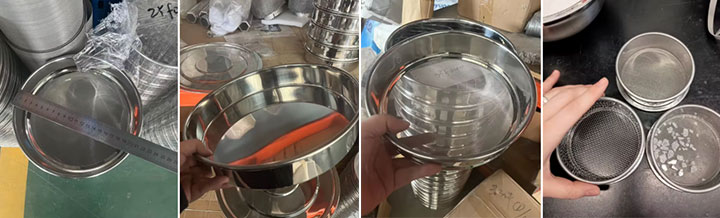
| Parameter Category | Typical Parameters | Soil Types Corresponding to Particle Size Ranges |
| Coarse Sieve | 2 mm | Coarse sand and above (coarse sand) |
| Medium Sieve | 1 mm, 0.5 mm | Medium sand, fine sand |
| Fine Sieve | 0.25 mm, 0.125 mm | Silty sand |
| Extra Fine Sieve | 0.063 mm (63 μm) | Clay and very fine silty sand |
| Sieve Material | Stainless steel wire mesh | Suitable for wet/dry sieving |
| Sieve Frame Diameter | 200 mm | Ensures uniform sieving |
| Sieving Method | Vibrating sieve or hand shaking | Vibrating sieve is faster and more uniform |
| Vibrating Time | 5–10 min | Ensures stable sieving |
The types of Test Sieve For Soil Particle Analysis can be categorized by screen material, size specifications, and supporting equipment. Common screen materials include stainless steel, brass, and galvanized iron. Stainless steel screens are highly corrosion-resistant, structurally robust, and do not easily deform over long-term use, making them suitable for laboratory testing with high data requirements. Brass screens have good toughness and are not easily cracked during repeated sieving, making them commonly used in routine soil sample analysis. Galvanized iron screens are affordable and suitable for preliminary sieving on construction sites or in the field. In terms of size, they are generally manufactured according to standards, with common diameters of 200mm and 300mm, and heights mostly 50mm or 75mm. They are relatively stable when stacked and easy to disassemble, wash, and replace. Matching vibrating sieves are typically divided into top-impact, tapping, and electromagnetic vibration types. Top-impact sieves provide uniform force and are suitable for soil samples with larger particles; tapping sieves offer fast sieving speed and clear stratification; electromagnetic vibration sieves are small in size and low in noise, making them more suitable for fine-particle soil samples.
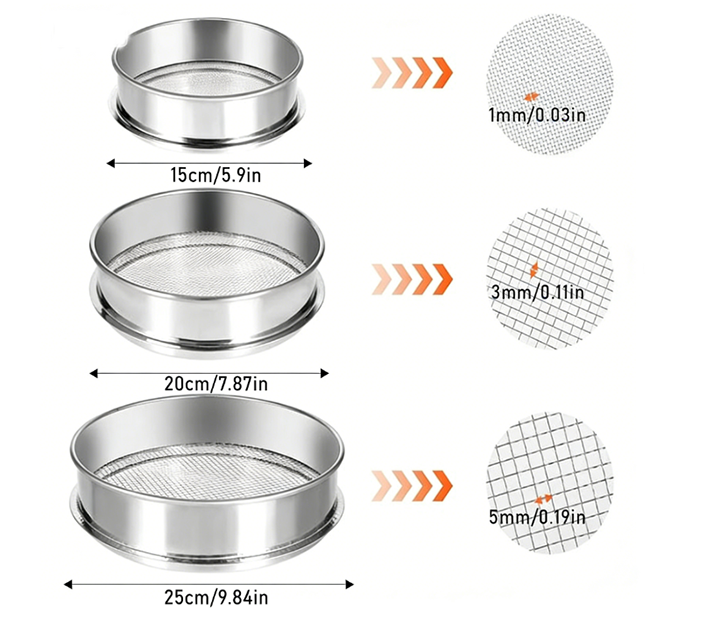
In a foundation investigation of a residential community, technicians used Test Sieve For Soil Particle Analysis to conduct soil particle size distribution tests. A 500g air-dried soil sample was taken on-site. Clumps were gently broken up, and the sample was then passed sequentially through sieves of 4.75mm, 2.0mm, 0.25mm, and 0.075mm, and continuously sieved for 15 minutes in a vibrating sieve. After sieving, the soil from each sieve layer was collected, weighed, and the content was calculated proportionally. The results showed that the soil composition was 8.2% gravel, 26.5% coarse sand, 31.3% medium sand, 22.7% fine sand, and 11.3% silt and clay. The data indicates that this soil is a well-graded sandy loam, with permeability and bearing capacity meeting design requirements. This data provides a better basis for subsequent foundation design and excavation, reducing the risks associated with uneven settlement.
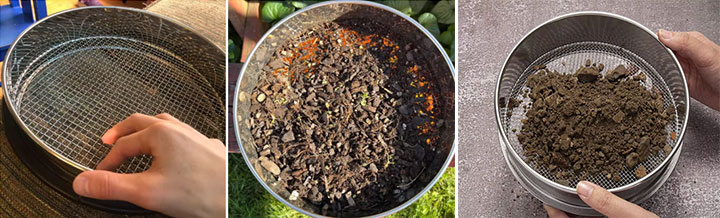
The Test Sieve for Soil Particle Analysis separates soil particles of different sizes through physical grading, clearly showing the proportions of various particle sizes. The sieve covers a common particle size range from 0.075 mm to 60 mm, and can be used for both dry and wet sieving to suit different soil types. Its durable material and various specifications make it suitable for both precise laboratory testing and on-site or field operations. In civil engineering construction, farmland management, environmental remediation, and scientific research, the test sieve helps to understand soil structure more intuitively, providing a reference for subsequent treatment or research.
Feb 27, 2026
Test Sieve For Soil Particle Analysis
Test Sieve For Soil Particle Analysis is a sieving instrument used to determine the particle size dis...
Feb 26, 2026
Test Sieve For Cement Fineness Testing
Test Sieve for Cement Fineness Testing is a screening tool used in cement production, quality inspect...
Feb 24, 2026
Stainless Steel Laboratory Test Sieve
Stainless Steel Laboratory Test Sieve is a sieving tool used to analyze particle size. It can separat...
Feb 11, 2026
Test sieves for laboratory use can cover sieving needs from ultrafine powders to coarse particles, an...

Then we look forward to hearing from you